This scenario has become a standard patient behavior: someone notices a new health concern, pulls out their phone, searches for answers, and clicks the results that feel credible. Within minutes, they compare clinic websites, scan patient reviews, check service pages, and look for signs of professionalism before deciding where to book an appointment.
What this behavior reveals is simple. Patients are responding to healthcare marketing signals, not just medical expertise. A slow website, unclear service pages, poor local visibility, or outdated messaging can push patients toward a competitor, even if your clinical care is stronger. In contrast, clinics that use clear messaging, strong local SEO, visible patient trust signals, and streamlined appointment paths consistently attract patients who are ready to take action.

Many doctors, specialists, and multi-location practices deliver outstanding care, yet their healthcare marketing lacks structure. Their websites fail to explain services clearly, their search visibility is weak, or their patient journey is fragmented. As a result, potential patients leave before ever contacting the clinic.
Below are seven proven healthcare marketing strategies that help clinics connect with patient intent, build trust faster, and increase online clinic visits from people actively looking for care.
Before we dive deeper, here are a few clear points that show what this guide will help you understand and apply through healthcare marketing:
Neglecting the digital marketing sector does not mean your clinic’s growth won’t be hindered. It usually means falling behind. Patient behavior has changed, and clinics that ignore this shift face real, measurable consequences. Below are six clear drawbacks clinics experience when digital healthcare marketing is missing or underused.
Most patients start their healthcare journey online. They search for symptoms, nearby clinics, insurance compatibility, or appointment availability. If your clinic does not appear on search engines, local listings, or maps, patients simply do not see you.
This is not about branding. It is about search visibility. Without SEO, local optimization, and content tied to patient intent, your clinic loses high-intent traffic. These are patients actively looking for care, not just browsing. When your competitors appear, and you do not, they capture the appointment.
Without digital healthcare marketing, your first impression is often incomplete or misleading. Patients may see outdated listings, old reviews, or incorrect clinic details pulled from third-party sites.
Marketing allows you to control messaging, visuals, service explanations, and tone. Without it, patients form opinions based on scattered or inaccurate data. In healthcare, trust forms quickly. If your clinic looks unclear, outdated, or inconsistent online, patients assume the same about your care, even if that is not true.
Patients expect transparency. They want to understand services, providers, costs, and next steps before booking. Clinics without digital marketing usually lack detailed service pages, doctor profiles, educational content, and patient guidance.
This creates uncertainty. When patients cannot find clear answers, they skip to your competitor. Strategic marketing builds trust by explaining conditions, treatments, and expectations in a way the common man can easily understand. Without it, your clinic feels unfamiliar, and unfamiliar healthcare options feel risky to patients.
Not all website visitors have the same motive. Some are just reading. Others are ready to book now. Digital marketing focuses on capturing these high-intent users through optimized landing pages, appointment tools, local ads, and clear calls to action.
Without these systems, even interested patients drop off. They may struggle to find contact details, booking options, or confirmation steps. This is not a care issue. It is a conversion issue. Clinics without marketing lose appointments they could have easily secured.
Referrals still matter, but they are no longer enough. Clinics that rely only on word-of-mouth experience unpredictable growth. Referrals fluctuate, slow down, and cannot scale consistently.
Digital healthcare marketing creates steady demand by attracting new patients outside your existing network. Without it, growth stalls. You also become vulnerable to market changes, new competitors, or shifts in patient behavior. Marketing creates stability by diversifying how patients find you.
One of the biggest disadvantages of skipping digital marketing is the lack of data. Without analytics, tracking, and performance tools, clinics guess instead of improving.
Digital healthcare marketing shows where patients come from, what pages they visit, where they drop off, and what leads to bookings. This data helps clinics improve patient experience, streamline workflows, and invest smarter. Without it, decisions are based on assumptions rather than evidence, which often results in wasted time and missed opportunities for growth.
Each drawback builds on the next. Low visibility leads to fewer visits. Fewer visits reduce trust signals like reviews and engagement. Lower trust reduces bookings. Fewer bookings slow growth. Over time, the gap between digitally active clinics and those that are inactive widens.
Digital marketing is no longer optional. It is part of how patients choose care. Clinics that avoid it do not just miss opportunities. They gradually withdraw from the patient decision-making process altogether.
“We are doing marketing, just as it used to be before the COVID pandemic.”
A decade ago, clinics could rely on print ads, outdoor billboards, and word of mouth for physician practice marketing. However, patient habits have changed, and those methods are no longer sufficient. People are far more informed now, and they want immediate answers before committing to a visit. And that’s the same reason why, for the first time in 2021, spending on digital advertising in the healthcare sector exceeded that of television advertising, representing 46% of total healthcare advertising expenditures.
Here’s what has shifted:
This doesn’t mean traditional methods are useless, but without a strong digital base, they don’t convert well. When both work together, clinics get the best results.
Digital healthcare marketing fosters trust before a patient ever speaks with your staff or visits your clinic. Most patients first meet your practice through a screen, not a front desk. What they see online shapes whether they feel confident enough to move forward.
Well-structured website content helps patients understand your services, specialties, and care approach. When information is clear and easy to find, patients feel informed instead of uncertain. Educational pages and condition explanations show that your clinic prioritizes guidance, not confusion, which increases perceived credibility.
Online reviews and patient feedback reassure patients that your clinic delivers consistent care. This digital validation often carries as much weight as a personal recommendation.
Professional design, accurate listings, and visible provider credentials signal reliability. Patients associate clean layouts and up-to-date information with organized, well-run practices. Digital marketing also improves trust through convenience. Fast-loading pages, simple booking tools, and clear contact options show respect for patient time and needs.
When clinics ask us how to bring in more patients online, we suggest the following strategies to them. This approach makes your clinic easier to find, easier to trust, and easier to book from any device.
Your website is often the first impression patients have of your clinic. Even if they find you elsewhere, they visit your site before booking. A high-converting website helps patients feel safe, informed, and ready to take the next step within seconds.
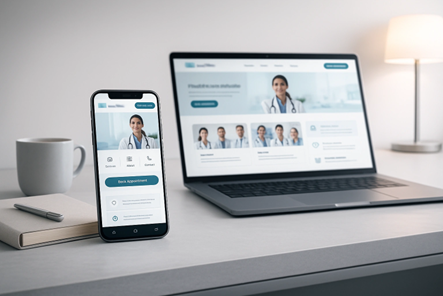
A strong healthcare site answers key questions quickly and guides patients without confusion.
Patients expect things like:
A slow or cluttered site pushes patients away fast. In healthcare marketing, mobile experience is crucial because most patients browse on their phones.
A strong site provides:
Certain pages provide patients with the clarity they need to make decisions confidently.
Important pages include:
Accessible websites show respect for every patient. Inclusive design also improves usability for everyone.
Helpful accessibility features include:
This element enables patients to find your website when searching for symptoms, treatments, or healthcare providers. Strong SEO is one of the most important components of modern healthcare marketing.
Patients search for healthcare with a mix of concern and curiosity. They want quick answers and reassurance before choosing a clinic.
Common search behaviors include:
When your website aligns with these intents, patients are more likely to click and stay longer.
On-page SEO is an important component for medical practice advertising. It helps search engines understand your content, making it easier for patients to read.
We focus on simple steps like:
Instead of grouping everything, each treatment deserves its own dedicated page. It gives patients clarity and improves SEO.
A focused treatment page usually covers:
Strong technical foundations make your SEO and healthcare marketing efforts more effective.
Some of the basics we handle include:
Local SEO helps your clinic show up when nearby patients search for a provider. Strong healthcare SEO services work hand-in-hand with local visibility.
Patients rely heavily on Google Maps when choosing a provider. They scan reviews, photos, hours, and directions before making a decision.
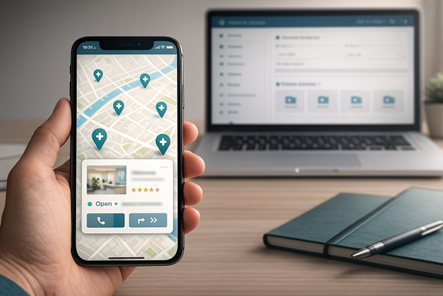
Common behaviors include:
Your Google Business Profile (GBP) shares essential details at a glance. A complete, updated profile helps patients understand your clinic instantly.
A solid GBP includes:
NAP stands for Name, Address, and Phone Number. These details must match everywhere: your site, GBP, and online directories.
Accurate NAP helps with:
Local visibility depends on several signals that directly impact healthcare marketing success.
Key factors include:
When clinics share helpful, educational information, people naturally view them as trustworthy sources.
Patients want explanations they can understand. When your healthcare marketing content speaks their language, it builds comfort and confidence.
Helpful content works because it:
We pick topics patients actually search for, not vague overviews.
Strong content ideas include:
Many people feel nervous about medical visits. Simple, friendly explanations help ease that stress.
Content can reduce anxiety by:
We often turn common front-desk questions into helpful healthcare marketing content. This saves time for your team and gives patients quick answers.
Popular question-based topics include:
Paid ads allow clinics to reach patients actively searching for care. A dedicated healthcare PPC agency can manage ads efficiently to reduce wasted budget and increase conversions through targeted campaigns.
While organic methods take time, medical practice advertising works well when clinics need quicker results.
Good scenarios for ads include:
Patients searching on Google already know they need help. They’re not browsing, they’re choosing.
Google Ads helps you:
Social ads reach people who may not be actively searching but match your ideal patient profile.
Strong social ads often include:
We help clinics plan ad budgets that are practical and easy to manage.
Important budget factors include:
Reviews strongly influence how patients choose a clinic. A clinic with positive reviews feels safer and more reliable. Healthcare marketing plays a significant role in getting positive reviews.

When people make health decisions, they want reassurance from others.
Reviews help because:
We help clinics request reviews without pressure or discomfort.
Some practical, ethical approaches include:
Negative reviews happen, and how you respond matters more than the review itself.
We guide clinics to:
With patient consent, positive reviews can be used to strengthen your online presence.
Common ways to showcase them include:
Healthcare social media marketing helps clinics build familiarity, humanize their team, and share helpful information in a friendly tone.
People follow clinics that feel real and approachable. They follow clinics because they like:
We create content that informs without overwhelming people.
High-performing posts include:
People respond well to clinics that speak like humans, not advertisers.
We build trust by:
Small mistakes can hurt trust, so we guide clinics carefully.
Common issues to avoid include:
When we look at how clinics grow today, one pattern stays consistent: patients choose providers who are vocal about their offerings and appear professional and transparent online.
Every healthcare marketing strategy we’ve shared here comes back to that same idea. A patient may start with a quick search, a social post, or a friend’s suggestion, but the final decision happens when they feel confident in what they see.
At Healthcare Web Profs, we’ve helped clinics at all stages, from new practices and busy offices to multi-location networks, improve their online reach by focusing on what patients care about the most. When your website loads quickly, your content appears helpful, your reviews seem genuine, and your online profiles stay up to date, people trust you before they even walk through the door.
Digital marketing helps patients find accurate, trustworthy information about your clinic online. Since most people search online before they call, a strong digital presence helps build early trust. At Healthcare Web Profs, we focus on making that first online impression clear, reliable, and easy for patients.
Some healthcare marketing methods, such as paid ads, yield quick results. Others, such as SEO and content, grow steadily over a few months. We help clinics combine both so they get early improvements while building long-term visibility that continues to attract patients year-round.
Yes. Smaller clinics often achieve strong results because even small improvements, such as a better website or an updated Google profile, stand out online. Patients care more about clarity and trust than clinic size, so these strategies help every provider compete effectively.
Not necessarily. Many improvements, like website updates or profile optimization, offer long-term value without ongoing costs. Paid search for physicians can be adjusted to any budget. We help clinics select practical tools that align with their goals without unnecessary expenses.
Yes. Clinics must avoid sharing patient details, use secure forms, and get consent for any testimonials or photos. We follow privacy-focused practices in every digital setup to keep clinics protected while still communicating clearly with patients.
Not always. Some clinics only need faster pages or clearer content. Others benefit more from a full redesign. We review your current site and recommend the option that provides patients with the smoothest and most trustworthy online experience.

